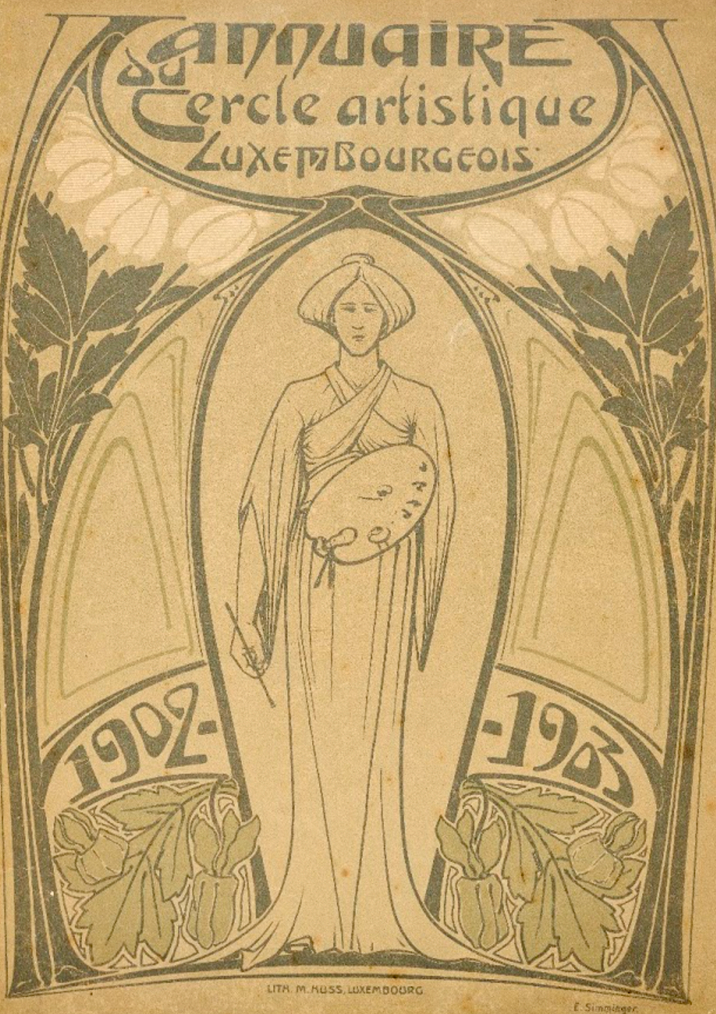
Art Society Yearbook, title-page illustration by E. Simminger, 1902–1903 – MNAHA
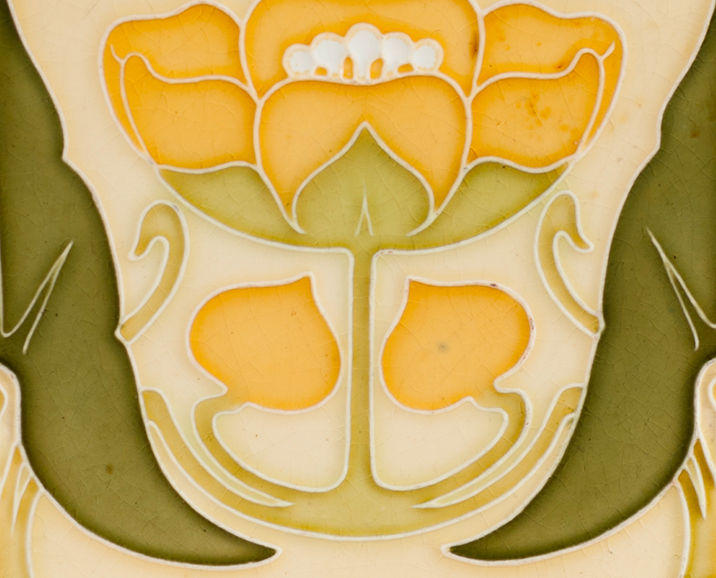
Wall tile, designed by Jean-Pierre Lanser and made of fine earthenware by Vereinigte Servais-Werke AG, Ehrang, c. 1904 – MNAHA, originally used in Mamer
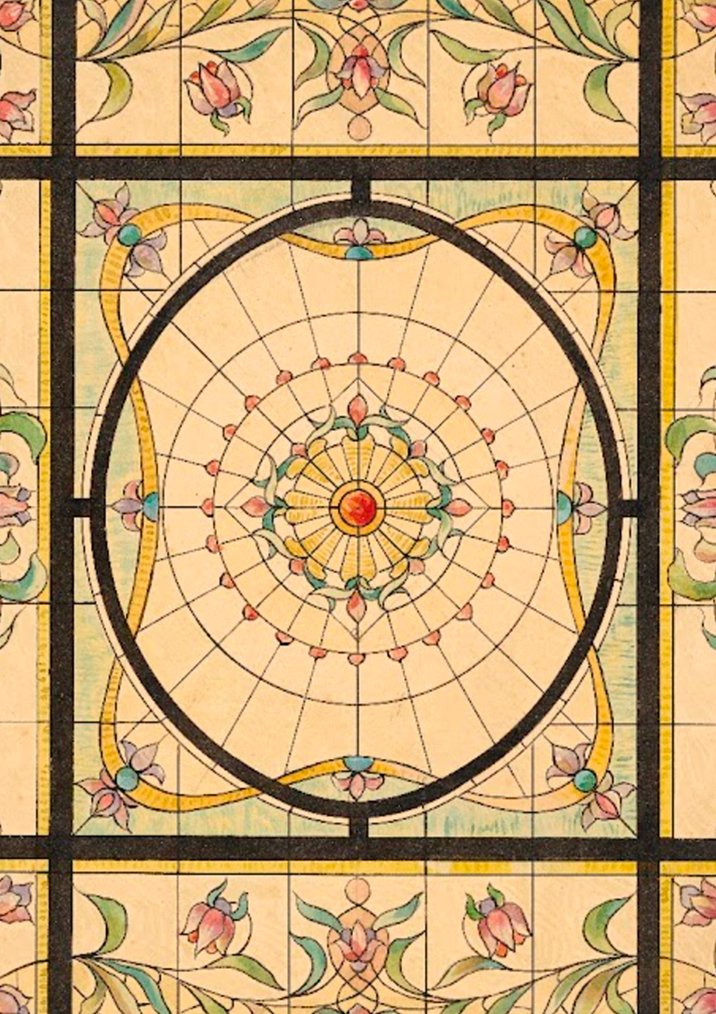
Design for a stained-glass window, drawn by Pierre Linster, 1902 – Vitraux d’art Bauer Collection
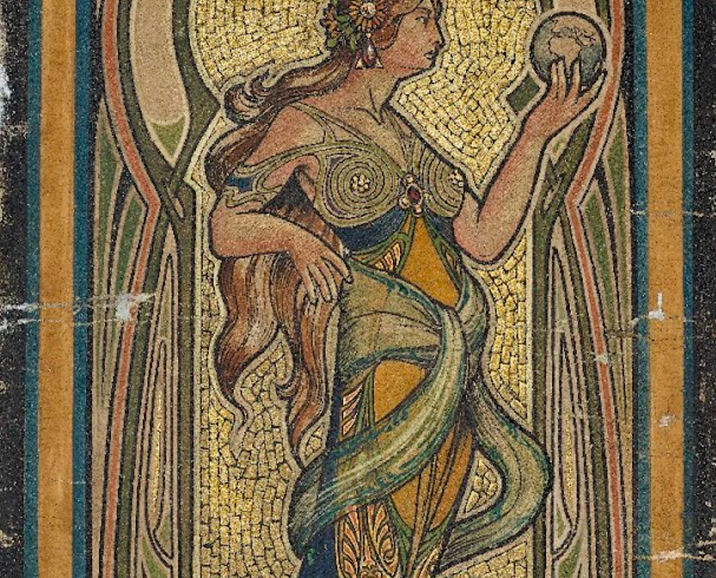
Design for a poster or wall decoration by Corneille Lentz, tempera on canvas, c. 1900 – MNAHA, gift of the Schleich–Lentz Foundation
Art
Nouveau and
Luxembourg
Art Nouveau – an applied arts, architecture and arts style from the turn of the 20th century – is closely tied to societal issues. The stylistic departure from tradition-bound historicism was accompanied by a sense of optimism, a drive for renewal but a simultaneous rejection of industrialisation’s influence on arts and crafts. Art Nouveau was a style to be newly created by artists open to innovation, inspired by nature and intended as an expression of its time and modernity. By finding beauty in everyday life and returning to the expertise of traditional craftsmanship, the goal was nothing less than creating a better world.
To what extent were these questions relevant for Luxembourg, a country that became an industrialised state in the 19th century? Was this societal transformation reflected in Luxembourgish art? Were artistic developments from abroad embraced? Who, in the small Grand Duchy that only gained full independence with its own dynasty in 1890, took the lead in these matters? How did the public respond to these artistic innovations?
The era of Art Nouveau in Luxembourg coincided with the founding of an art association in 1893, which went on to organise regular salon exhibitions. In 1902, the Cercle artistique also introduced an art prize – the Prix Grand-Duc Adolphe – which still exists today. And the establishment of a state-run École d’Artisans in 1896, where artists and craftsmen were trained together, further invigorated the local art scene.
Through fascinating works – especially from the field of applied arts –, previously unseen sketches and historical photographs, the Nationalmusée um Fëschmaart’s exhibition offers the first in-depth look at Luxembourg’s innovative Art Nouveau period. It also reveals a continued attachment to tradition and orientation toward artistic trends from Germany, France and Belgium. The balancing act between a love of tradition and a desire for change shaped the society of the Luxembourgish nation still in search of its identity around 1900, and this dynamic is echoed in the artistic expression of the time.
-
01
19 March 2026
at 6 pmOpening
-
02
20 March to
18 October 2026Temporary exhibition at the Nationalmusée um Feschmaart
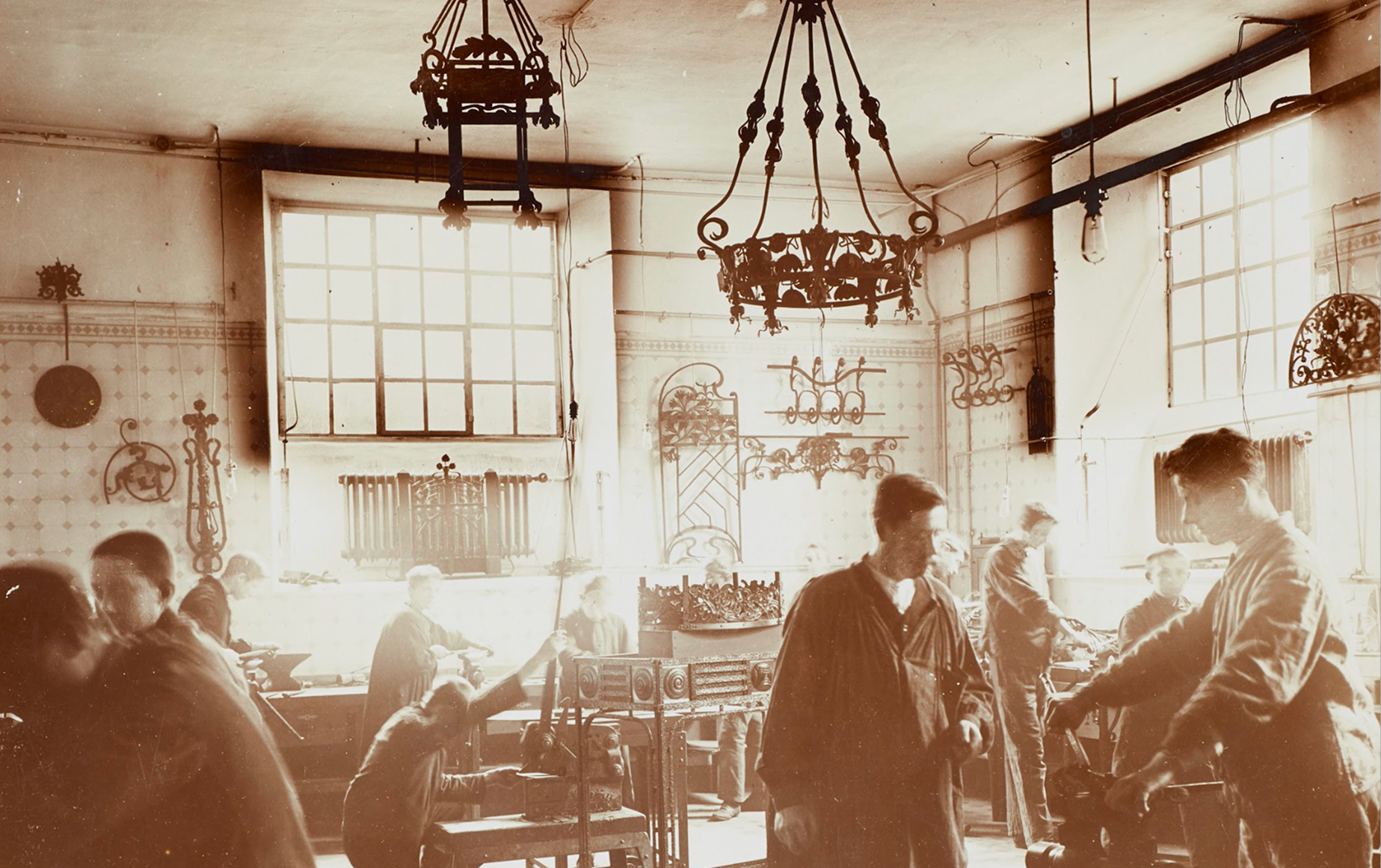
Photograph of the ornamental metalwork workshop at the Handwierkerschoul, c. 1900 – M. Galowich Collection
Audio guides
Discover our audio guides to accompany you on your exhibition visit.